


The Challenge
With Apploi’s AI-backed solution, users can post to multiple job boards, attract and track top-quality applicants, then onboard and schedule quickly. By automating tasks like credential checks, interview scheduling, and unlimited text/email communication, organizations can accelerate their processes by up to 71%.
Built for the unique needs of healthcare, this NYC-based tech company is trusted by more than 9,000 organizations to deliver a speedy, seamless process from job postings through shift management.
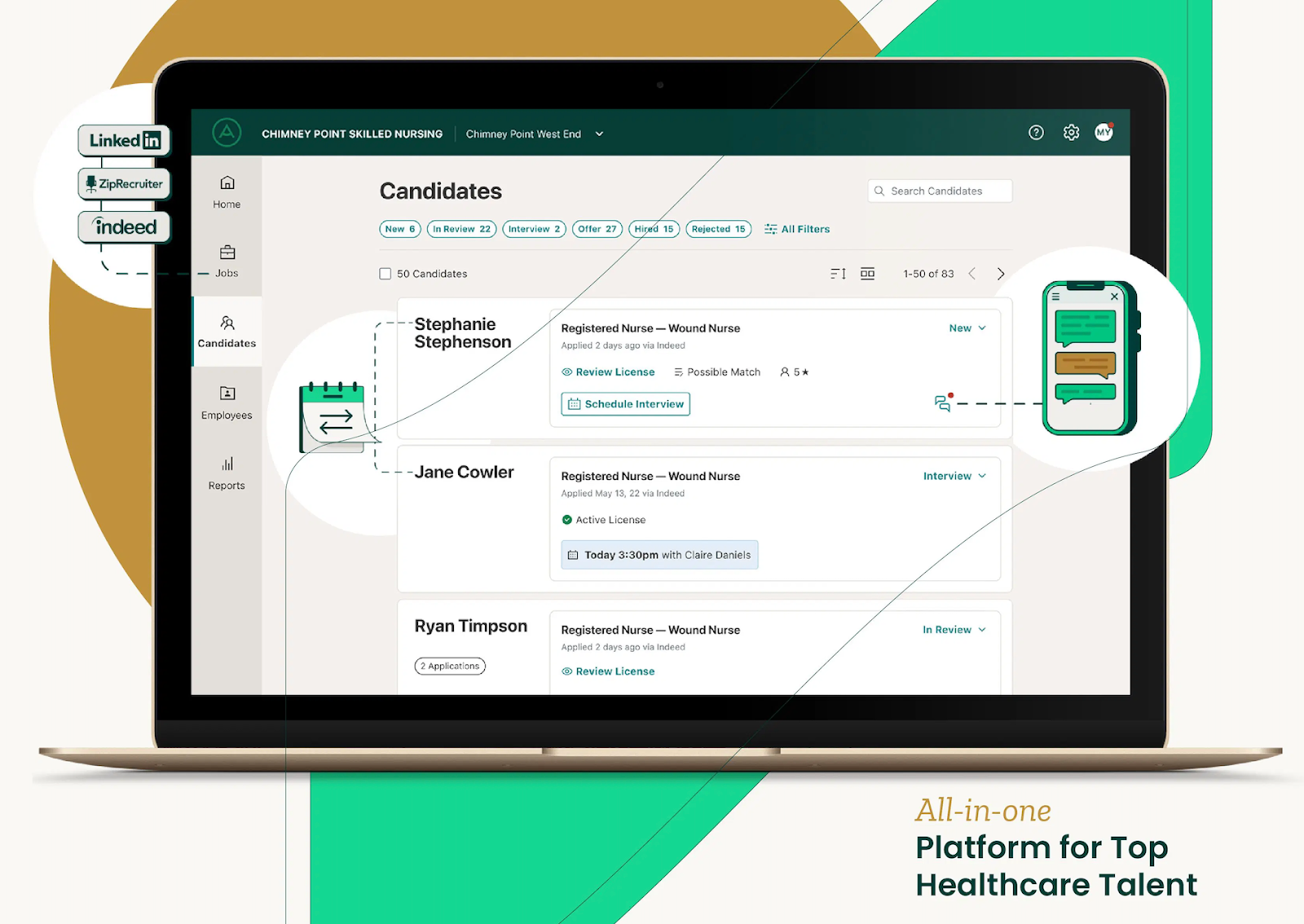
For Apploi's customers, seamless HRIS integrations are critical. When a candidate is marked as hired in Apploi, their complete profile needs to flow directly into the customer's HR system. This includes personal information, signed documents with sensitive data like Social Security numbers, and facility-specific details. Without the integration, HR teams at healthcare facilities faced 17 hours or more of manual data entry each week.
Without an HRIS integration, it takes 10 full minutes to create an employee record. If you imagine a hundred people or more getting hired every single week, that adds up to a thousand minutes of manual work per week.
– Jainam Doshi, Director of Technical Product
Apploi's engineering team had already proven their integration capabilities, having built 50+ HRIS integrations in-house. However, as they evaluated expanding coverage to enterprise systems like UKG Pro, Oracle, Paylocity, and Paycor, they faced a strategic choice: where should engineering focus their time to create the most value for customers?
The build-vs-partner decision
Apploi's engineering team was able to build all HRIS integrations in-house. The question was whether they should. Each new HRIS integration meant weeks of development time that could otherwise go toward core product features. Building out coverage for UKG Pro, Oracle, Paylocity, and Paycor would have taken an engineer 6-8 weeks each.
Beyond engineering capacity, there was the partnership challenge. Enterprise HRIS vendors like UKG and Paycor typically require partnership agreements and technical account relationships for optimal API access and support. Establishing these vendor partnerships independently would delay go-to-market and customer requests by 6-12 months.
We were seeing a lot of demand for UKG integrations, and we had the ability to build the integrations ourselves. But we had to wait months for getting access to the technical contacts and an official partnership with UKG. Without it, we would have run into a lot of challenges, especially since larger customers who demanded these need a lot of customization. With Kombo, we were able to get this done in two weeks.
– Jainam Doshi, Director of Technical Product
The Solution
Immediate HRIS coverage through vendor partnerships
Kombo provided Apploi with immediate access to UKG Pro, Paylocity, Oracle, Paycor, and 40 more HRIS systems through a unified API. The unified API approach meant Apploi's engineering team could develop their employee creation logic once and use it across all integrated systems - without having to know the nuances of each HRIS platform. This allowed Apploi’s engineering team to maintain their full focus on developing their core product capabilities.
Kombo's established partnerships with enterprise vendors like UKG, Paycor, Paylocity, and Oracle meant Apploi could support customers on these systems immediately. This bypassed the 6-12 month partnership approval process that typically blocks vendors from accessing enterprise APIs. Further, Kombo also provided sandbox environments for these systems. Developers could test employee creation workflows and field validations before deployment, rather than discovering compatibility issues during customer implementations. This removed the need to coordinate testing with customers.
Simplified employee creation
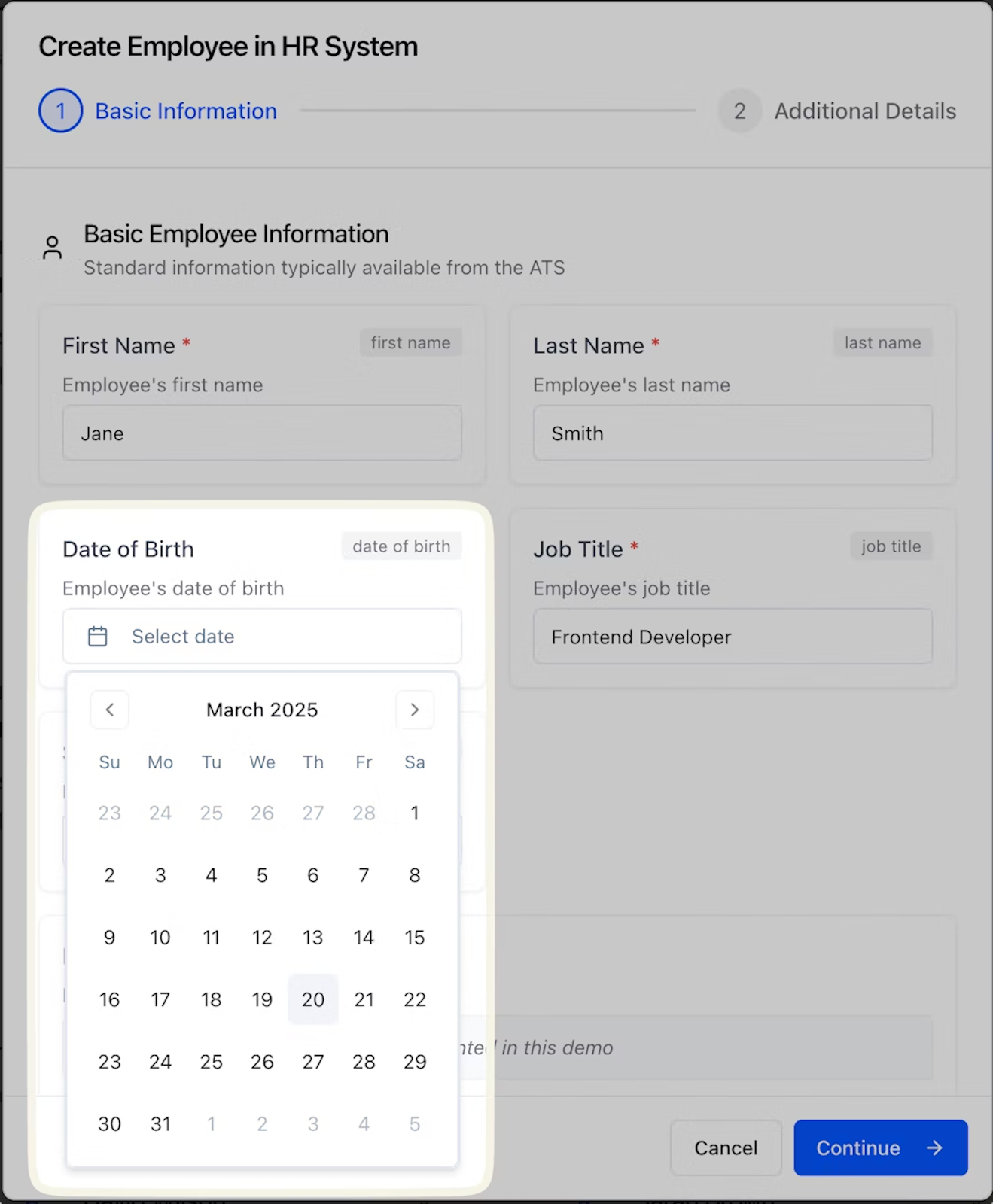
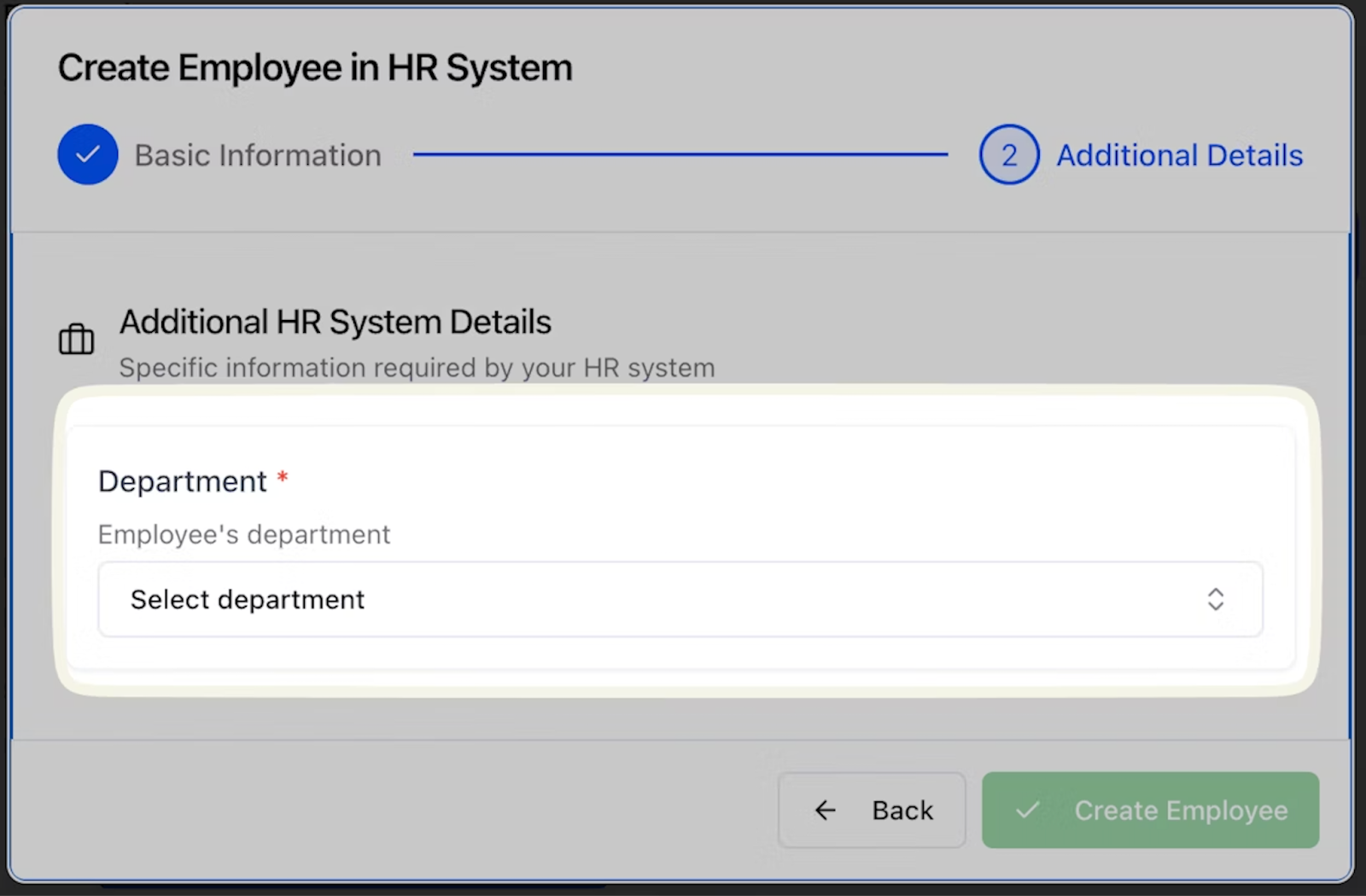
Each customer's HRIS required different fields to create an employee record. One system might require birth date and department assignment, while another needed legal entity information. This variability meant Apploi faced a difficult choice: build custom logic for each customer configuration or create a one-size-fits-all form that asked for every possible field upfront, regardless of whether it was needed.
Kombo solved this scalability challenge by dynamically generating the right form for each system and configuration. When a recruiter marks a candidate as hired, Kombo automatically determines which fields the customer's HRIS configuration requires, pre-fills everything already available in Apploi, and only prompts the recruiter to fill in the missing data. This meant Apploi could support diverse customer configurations without building custom logic for each one.
Hands-on implementation support
Kombo's team provided hands-on support and system expertise that made it even faster for Apploi to solve customer problems. Through weekly sync calls and dedicated Slack channels, Kombo's engineers supported Apploi with navigating questions for new systems - from setting up custom termination reason fields in UKG to configuring legal entity mappings in Paylocity. The collaborative model gave Apploi the benefits of Kombo's HRIS expertise while maintaining full control over their product roadmap and customer relationships.
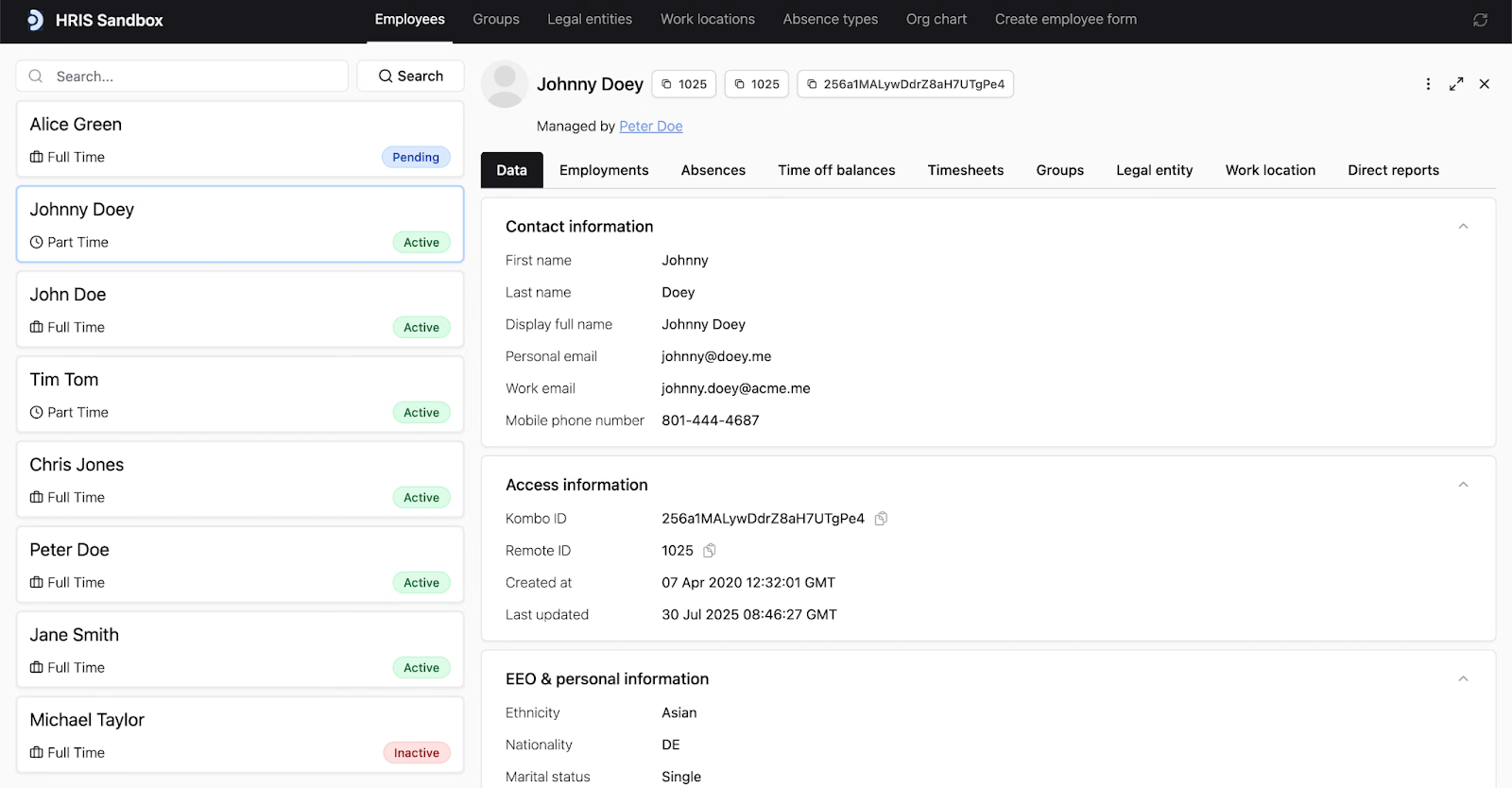
Kombo's built-in debugging tools also simplified troubleshooting. For instance, the Data Explorer lets Apploi's team quickly search for specific employee records and view their data in a simple interface. This eliminates the need to page through API responses or write custom queries.
The Outcome
Eliminated integrations as sales bottleneck
For us, the biggest change is that we can say ‘yes’ to customers way more often. When a customer asks if we have this integration, we don’t have to say ‘we’ll look into it’ anymore. We can say: ‘We work with a partner that owns this integration and has done it countless times. We’re confident it’ll get done.’
– Jainam Doshi, Director of Technical Product
This confidence accelerated sales cycles and allowed Apploi to compete and win deals with larger healthcare organizations using previously unsupported enterprise systems. For instance, after implementing Paylocity, Apploi onboarded five healthcare facilities on it in just one month - showing the direct revenue impact of expanded HRIS coverage.
Freed up months of engineering capacity
With an average of four to five weeks of development per integration, building coverage for the 46 HRIS provided by Kombo would have required three engineers to work exclusively on this for 13 to 17 months. More importantly, the partnership eliminated the opportunity cost of integration work.
Those same engineering quarters were instead invested in building proprietary features like automated job distribution to multiple job boards and in-platform verification for medical licenses. These customer-facing features directly impact retention and differentiation - unlike HRIS integrations, which are typically table stakes in deals.
Hundreds of hours saved for HR teams
The automated HRIS integrations delivered immediate benefits for Apploi's healthcare customers. Recruiters could now complete the hire-to-HRIS handoff in seconds rather than coordinating with HR teams to manually transfer candidate information. This faster process meant new hires appeared in payroll systems immediately, eliminating delays that previously left employees waiting days or weeks to be properly onboarded.
The automation also strengthened data security and compliance. By eliminating manual transcription of Social Security numbers, tax information, and other protected data, healthcare facilities reduced the risk of data entry errors.
All your integrations with one API
Integrate Kombo once – offer hundreds
of integrations off the
shelf to your customers.